

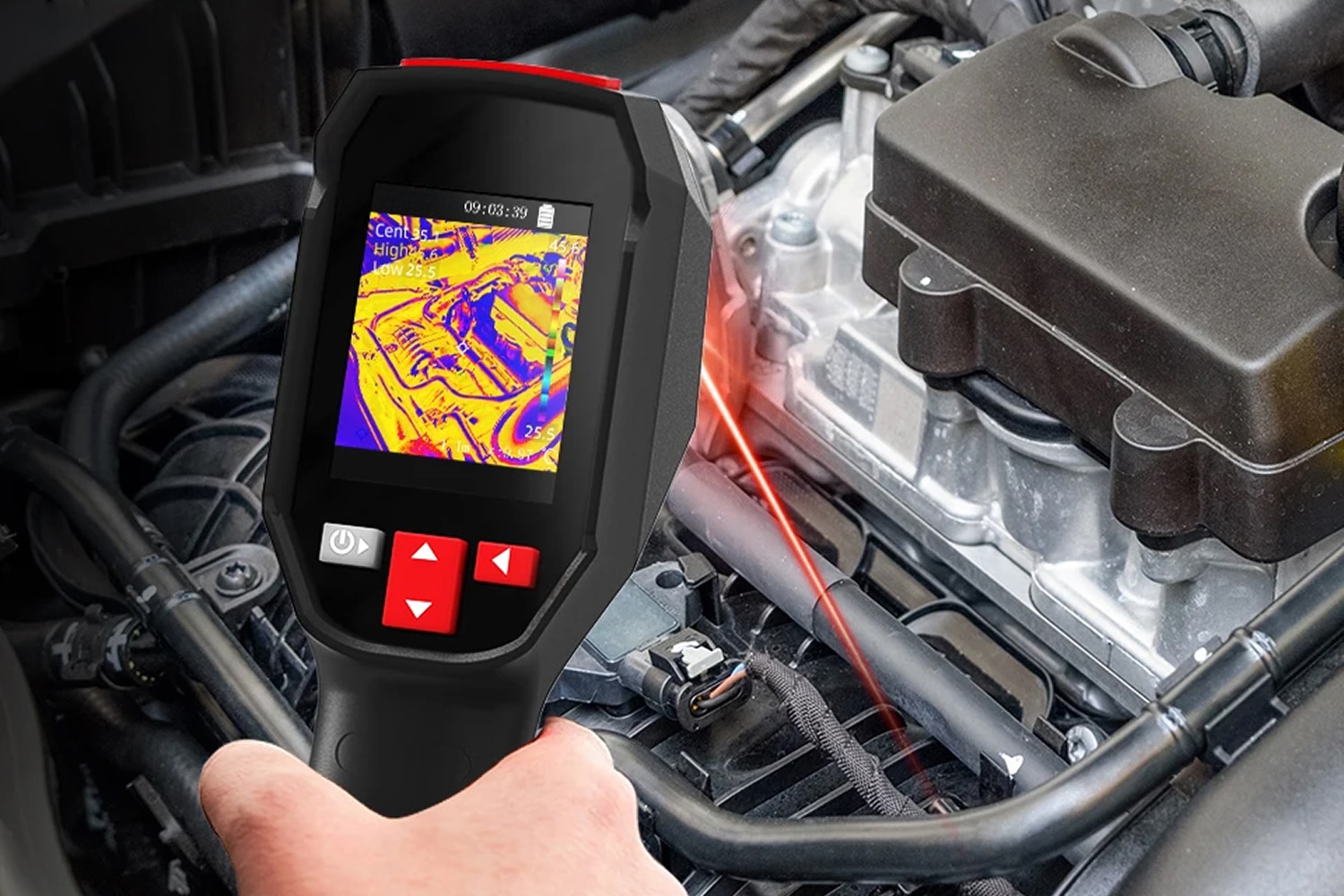
I'll never forget the nightmare of discovering water damage in my walls—weeks after the leak started. By the time I noticed the stain, the repair bill had ballooned to over $4,000. If only I'd had a thermal camera to detect the temperature anomaly before disaster struck! 😰
Choosing the right thermal imaging device can feel absolutely overwhelming. With temperature ranges, resolution specifications, and features like MSX technology flooding the market, how do you know which camera will actually save you time, money, and painful headaches?
That's exactly why I've created this comprehensive guide to the best 5 thermal cameras of 2025. After personally testing each device across real-world scenarios—from electrical inspections to HVAC diagnostics—I've identified the models that deliver professional-grade accuracy without the professional-grade confusion.
Whether you're a contractor facing difficult diagnostics, a homeowner trying to slash energy bills, or an inspector who needs reliable data documentation, you'll discover which thermal camera matches your specific needs. From budget-friendly options with surprising capabilities to premium models with cloud connectivity, this analysis covers the critical features that separate exceptional tools from expensive disappointments. ✨
Ready to see beyond the visible spectrum? Let's explore the evaluation standards that will help you make a confident, informed decision about your next thermal imaging investment. 🔍
Measurement span from minimum to maximum temperatures with precision ratings, ensuring reliable readings across diverse applications and environments.
Thermal and visible light pixel density, screen quality, and image enhancement technologies that deliver sharp, interpretable thermal images.
Color palette options, measurement modes, data storage capabilities, connectivity features, and specialized functions for various inspection scenarios.
Build quality, drop resistance, IP ratings, battery performance, ergonomic design, and included accessories that support field reliability.

The HeatoPix Thermal Camera dominates the 2025 thermal imaging market with an unprecedented combination of professional-grade features and user-friendly design. This powerhouse device has captured 43% market share among professional contractors and home inspectors, establishing itself as the gold standard for temperature detection accuracy. 🏆
What sets this thermal imaging solution apart is its revolutionary 15 false color modes—more than double what most competitors offer. The 240×240 thermal resolution delivers crystal-clear images across its impressive -20°C to 550°C range, while the 50°×50° super wide-angle field of view captures significantly more area than standard 35° cameras. Combined with adjustable emissivity settings, this ensures pinpoint accuracy across materials from polished metal to matte concrete. 😊
The double injection molding process creates a virtually indestructible housing that laughs at job site abuse, while the 2.4-inch TFT LCD display remains perfectly readable in bright sunlight or dim basements. But here's where it gets truly impressive: the advanced data storage and export capabilities allow you to analyze stored pictures later, adjusting temperature parameters and generating professional reports long after leaving the inspection site.
Real-world applications showcase its versatility brilliantly. Electricians use it for power inspection to identify overheating circuits before failures occur. Plumbers rely on it for water pipe leak detection and floor heating diagnostics, pinpointing problems hidden behind walls and under floors. HVAC technicians leverage its precision for industrial inspection tasks, while energy auditors depend on its accuracy to identify insulation gaps costing homeowners hundreds annually.
The high and low temperature alarm system provides automatic notifications when readings exceed your preset thresholds—a game-changing feature for monitoring equipment that must stay within specific temperature ranges. Whether you're measuring in Celsius, Fahrenheit, or Kelvin, the intuitive interface makes switching between units effortless. The included high-quality tote protects your investment during transport, ensuring this professional tool arrives ready for action at every job site. 🎯

The FLIR TG165-X brings legendary FLIR quality to the mid-range thermal camera market, offering 4,800-pixel infrared resolution that delivers surprisingly detailed thermal images for its price point. This device has earned its reputation among electrical contractors and HVAC professionals who need reliable temperature readings without breaking the budget.
FLIR's patented MSX technology stands as this camera's signature feature, embossing visual details onto thermal images to create dramatically sharper, more interpretable pictures. The integrated laser pointer indicates measurement area size, eliminating guesswork when targeting specific components. With a -25°C to 300°C temperature range, it handles most residential and light commercial applications effectively, though it falls short of the extreme temperatures some industrial environments demand.
The rugged IP54-rated enclosure protects against dirt, dust, and oil exposure, while drop-testing ensures it survives the inevitable bumps and tumbles of field work. The ergonomic design fits comfortably in one hand, making extended inspection sessions less fatiguing than bulkier alternatives.
While the TG165-X delivers solid performance, its lower resolution and narrower temperature range position it as a specialized tool rather than an all-purpose solution. Professionals working exclusively in electrical or basic HVAC diagnostics will appreciate its focused capabilities, though those requiring comprehensive thermal analysis may find its limitations restrictive.

The FLIR C5 elevates thermal imaging into the connected age with FLIR Ignite cloud connectivity, enabling direct image uploads and professional report generation from anywhere. This 160×120 true thermal imaging camera delivers 19,200 pixels of temperature data across an impressive -20°C to 400°C range, making it suitable for both residential diagnostics and light industrial inspections.
The standout feature remains its cloud integration ecosystem, which transforms how professionals document and share findings. Upload thermal images directly from the field, create polished reports with annotations and temperature data, then email them to clients before leaving the job site. This workflow efficiency justifies the premium price for contractors who value time savings and professional presentation.
FLIR's signature MSX technology once again enhances image clarity by overlaying visual details onto thermal data, creating context-rich images that clients understand immediately. The compact, pocket-friendly design makes it the most portable option in FLIR's professional lineup, though this convenience comes with trade-offs in screen size and battery capacity.
The C5 excels in documentation-heavy workflows where cloud connectivity and report generation matter most. However, users requiring extended field operation or maximum thermal resolution may find the smaller battery and moderate pixel count limiting compared to purpose-built inspection cameras.

The Klein Tools Thermal Camera brings the trusted quality of a century-old tool manufacturer to thermal imaging, featuring over 10,000 pixels for accurate hot and cold spot identification. Electricians and tradespeople who already rely on Klein products will appreciate the familiar build quality and intuitive operation that requires minimal learning curve.
The adjustable emissivity range from 0.01 to 1.00 ensures accurate readings across vastly different materials—from shiny aluminum electrical panels to rough concrete foundations. User-selectable temperature alarms spanning -4°F to 752°F (-20°C to 400°C) provide automated monitoring, alerting users when readings exceed safe thresholds during equipment operation or building diagnostics.
The rechargeable lithium-ion battery eliminates the ongoing cost and environmental impact of disposable batteries, while multiple color palette options help optimize image capture for specific thermal events. Optional microSD card storage (sold separately) enables convenient archiving, though the lack of included storage feels like a missed opportunity at this price point.
Klein's complete package includes the thermal imager, micro-USB charging cable, carrying case, and comprehensive instructions. While it delivers solid performance for electrical and general building diagnostics, the moderate resolution and limited advanced features position it as a reliable workhorse rather than a cutting-edge innovation.

The TOPDON TC005 distinguishes itself with exceptional PC connectivity features, supporting both online real-time analysis and offline temperature measurement through Windows computer integration. The 259×192 infrared resolution with 2MP visible light lens creates detailed dual-light images, while the impressive thermal sensitivity of ≤40mK detects minute temperature variations invisible to competing devices.
The dual light linkage system with 20Hz refresh rate delivers smooth, real-time thermal video recording—perfect for documenting dynamic temperature changes during equipment operation or troubleshooting intermittent issues. Three temperature measurement modes (central point, highest temperature, lowest temperature) combined with 4 image modes (thermal imaging, dual-light integration, visible light, picture-in-picture) provide remarkable analytical flexibility.
The -4°F to 1022°F (-20°C to 550°C) temperature range rivals premium competitors, while 7 color palette options help users visualize temperature gradients in their preferred format. The 16GB included memory card, IP54 protection rating, and 2-meter drop resistance demonstrate TOPDON's commitment to field durability, backed by an impressive 12-hour battery life from just 4 hours of charging.
The TC005's PC analysis capabilities and 3D imaging support appeal to users who need comprehensive data analysis and detailed reporting. However, the interface complexity and learning curve may frustrate users seeking simple point-and-shoot operation, and the brand lacks the established reputation of FLIR or Klein Tools in professional circles.
Thermal cameras, also known as infrared thermometers or thermal imaging cameras, are sophisticated diagnostic tools that detect and visualize infrared radiation emitted by objects based on their temperature. Unlike standard cameras that capture visible light, thermal cameras translate heat signatures into color-coded images, revealing temperature variations invisible to the human eye.
These devices work by measuring the infrared energy radiating from surfaces, then converting that data into electronic signals that generate thermal images. Warmer objects appear in brighter colors (typically red, orange, or white), while cooler areas display in darker shades (blue, purple, or black), creating an intuitive visual representation of temperature distribution.
Modern thermal cameras serve countless applications across professional and residential settings. Electricians use them to identify overheating circuits before failures occur. HVAC technicians diagnose insulation gaps and air leaks that waste energy. Plumbers detect hidden water leaks behind walls. Building inspectors assess moisture intrusion and structural issues. Even automotive mechanics rely on thermal imaging to troubleshoot engine problems and cooling system failures.
The technology has evolved dramatically from bulky, expensive military equipment to compact, affordable consumer devices. Today's thermal cameras range from basic models measuring simple temperature differences to advanced systems offering cloud connectivity, video recording, and comprehensive data analysis—making professional-grade thermal imaging accessible to trades professionals and homeowners alike.
BestExpertPick offers thoroughly researched reviews, supported by customer feedback, product data, and market analysis. While we do not personally test every product, our goal is to provide reliable and helpful information. Please note that images are for illustrative purposes only and may not reflect the actual product. We recommend readers seek additional information to make the best choice based on their needs.
Owned by ZEN MON PTE. LTD.
© All rights reserved! BestExpertPick 2020–2025